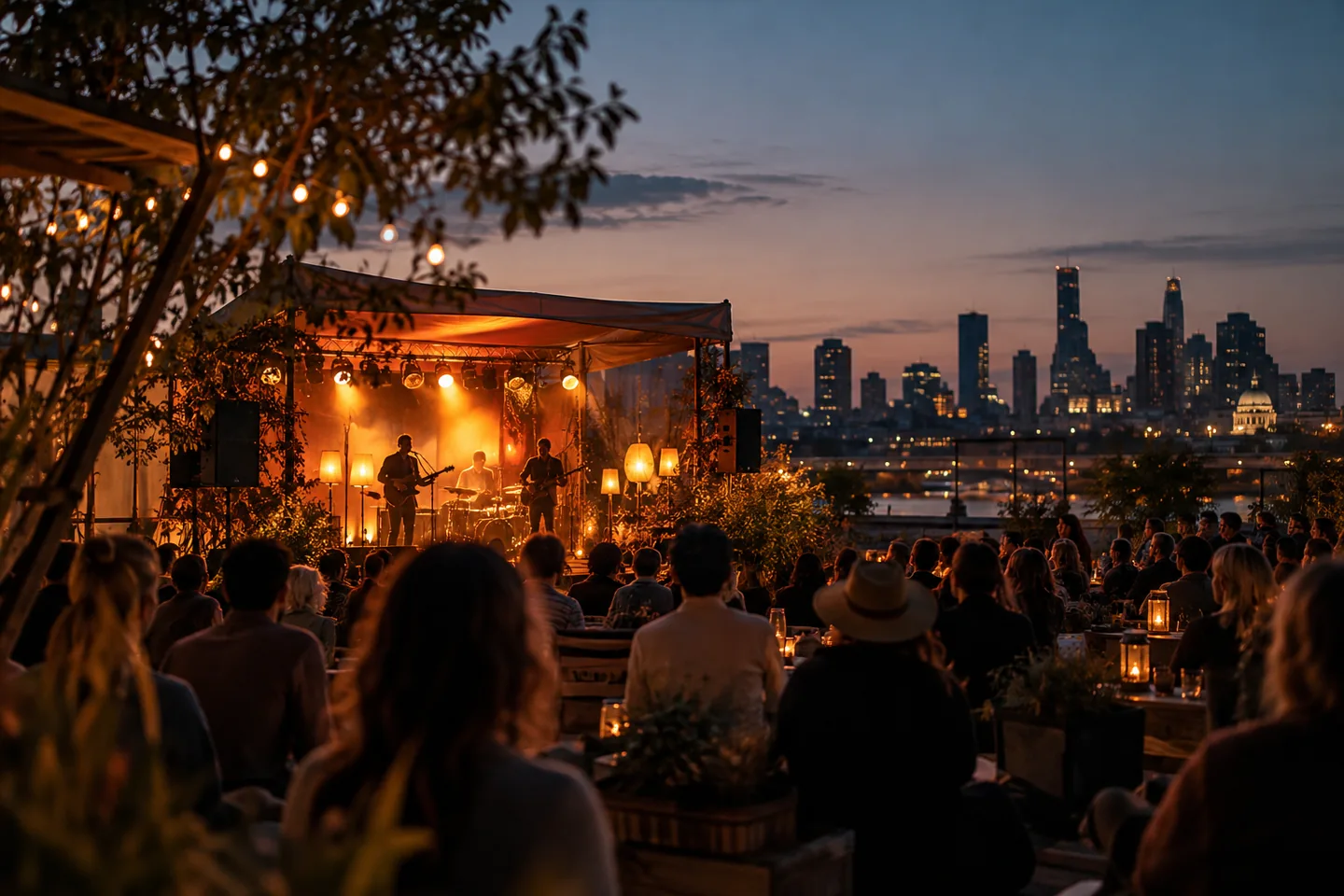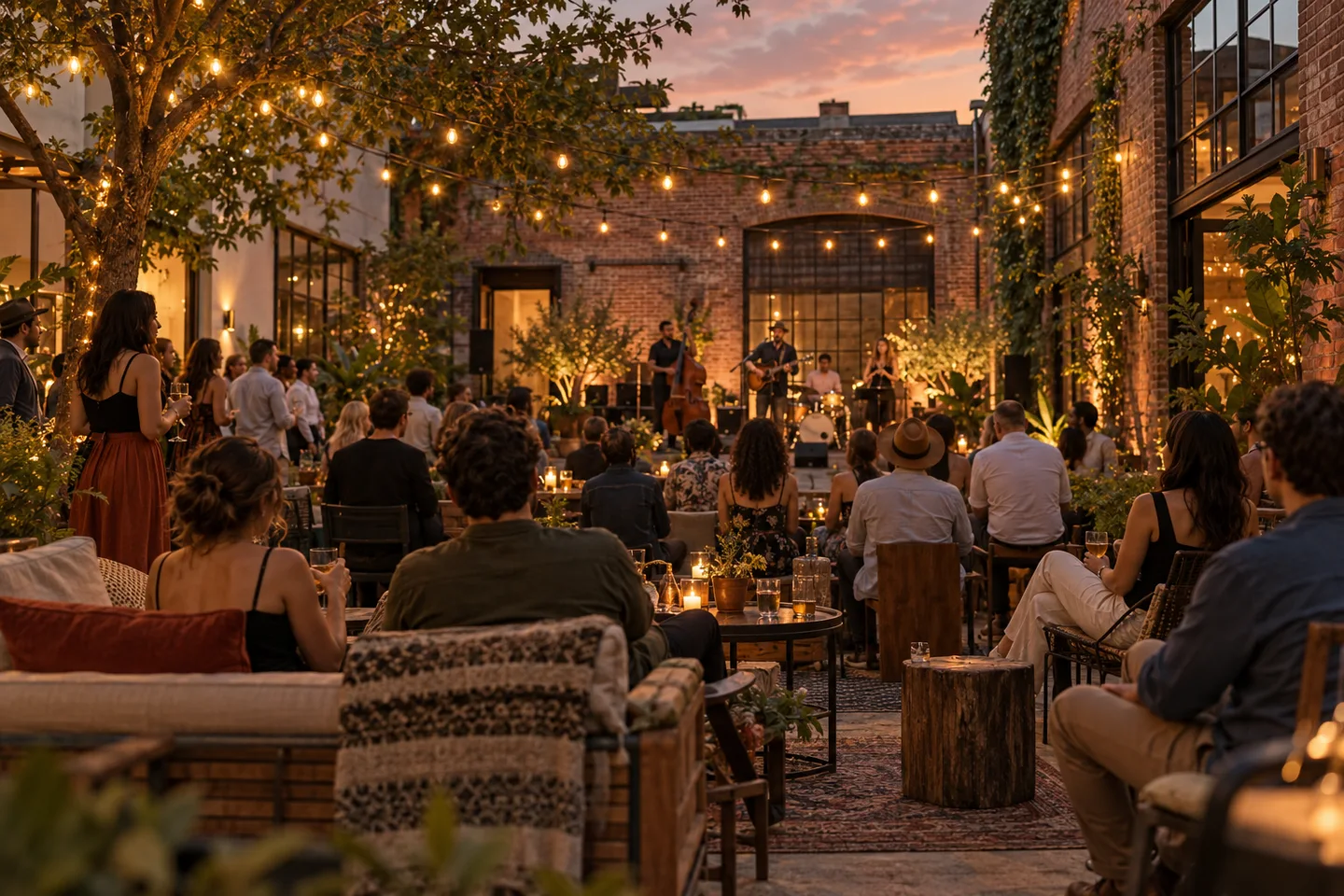
Live music changes how a city is used. A room normally passed on the way home becomes a destination; a square briefly acquires a stage; people who rarely share a space stand together and listen. The cultural value lies partly in the performance and partly in these temporary arrangements of attention, movement and encounter.
That value is not automatic. A festival can open opportunities or exclude people through cost and access. A busy venue can support local creativity while creating difficult conditions for neighbors. Understanding a city's music culture means looking at the relationships around the stage as carefully as the names printed above it.
A scene is more than a headline act
A music scene includes rehearsal rooms, promoters, sound technicians, designers, instrument repairers, record shops and audiences. Some work is visible on the night; much of it happens before doors open. A polished performance can depend on a modest room where an artist first tried new material and on the people who made that experiment possible.
For a visitor, this suggests a different way to explore. Follow a local venue's program across several dates instead of searching only for familiar touring names. Notice recurring collaborators and mixed bills. Read the organizer's description of the event, but distinguish its ambitions from demonstrated outcomes. An exciting manifesto does not tell you how musicians are paid or who can actually afford to attend.
Repetition gives places a cultural rhythm
A one-off festival can attract attention; a regular series can become part of a neighborhood's calendar. Repetition creates familiarity with a room, a route and a set of people. It also gives an audience a chance to encounter unfamiliar music within a setting that feels navigable. A small monthly performance may therefore matter in ways a spectacular annual event cannot reproduce.
Consider the difference between discovering a venue once and returning enough times to understand its character. You begin to notice how an opening act is introduced, how different audiences use the room and whether programming takes creative risks. These are observations to make over time. A single enjoyable evening is evidence of that evening, not proof that an entire scene is thriving.
Festivals make temporary maps of a city
A multi-venue event asks an audience to move between places. Its program becomes a map connecting streets, transport, restaurants and public spaces. This can bring attention to buildings people normally overlook. It can also expose practical barriers: a steep route, an inaccessible entrance, an expensive transfer or a late finish without a workable way home.
UNESCO's profile of Chennai as a Creative City describes music programming distributed through the city. That provides one documented example of culture operating across multiple urban settings. Our broader reading is that distribution matters as much as scale. To assess another festival, ask where its activity happens, what connects those locations and who is left outside that network.
Participation is not the same as proximity
Living near a festival does not necessarily mean being able to take part. Ticket prices, working hours, language, childcare, sensory conditions and physical access can all affect participation. A program may be publicly visible yet difficult to enter. Free admission removes one barrier but does not settle the others.
Look for concrete arrangements rather than broad claims of inclusivity. Are access details easy to find? Is there seating where people need it? Does information explain what visitors can expect? Are activities spread across times and locations that suit different audiences? These questions are a framework for reading an event, not a demand that every performance offer the same experience. Different formats can serve different needs when those needs are considered clearly.
Local economies deserve precise language
A performance can create paid work and bring customers to nearby businesses. It can also generate costs, disruption and uneven benefits. Without a specific study, it is misleading to convert a crowded street into a claim about citywide economic impact. Attendance, spending, wages and lasting cultural capacity are different measures.
As a reader, ask what an economic claim counts. Does it include spending that would have occurred locally anyway? Does it distinguish visitors from residents? Who paid for infrastructure, and who received the revenue? You do not need to calculate the answer yourself to recognize when an impressive figure lacks context. A cultural event can be meaningful without an inflated monetary justification.
Neighbors are part of the audience for decisions
Music reaches beyond the ticket boundary through sound, traffic, waste and changes to street access. The people affected may love the event, dislike it or hold both feelings at once. Treating every complaint as hostility to culture avoids the actual questions about how an event is managed.
A useful cultural perspective holds two ideas together: cities need places where people can gather, and residents need workable daily lives. Consider how organizers communicate schedules, manage departures and explain road changes. Those details shape whether a celebration becomes a welcome recurring presence. Visitors can contribute by following designated routes, leaving quietly where appropriate and treating nearby streets as places where people live rather than as an extended venue lobby.
Hear the room as well as the performance
Different rooms produce different kinds of attention. A seated listening space, a standing club and an outdoor stage invite distinct behavior. None is inherently more serious. What matters is whether the setting supports the performance and whether the audience understands the expectations. Read the event description and observe staff guidance once inside.
Ask what your own behavior contributes. Filming above your head can change another person's view; talking through a quiet passage changes the room's listening conditions. Purchasing directly from an artist where available may support them, but do not assume every merchandise arrangement works the same way. Thoughtful participation starts with paying attention to the particular event instead of applying a romantic idea of what live music should be.
Choose a smaller encounter deliberately
You can explore a scene without expecting immediate expertise. Choose one performance whose description interests you, read about the artists through their own channels and listen without trying to classify everything at once. Afterward, note a sound, a collaboration or a question that might lead to another event. Avoid treating a small audience as a failure or a packed room as proof of quality. Those observations require context you may not have. Repeated attendance offers a stronger basis for understanding how a venue and its audience develop than a single evening spent looking for a definitive local sound.
Make room for culture after the closing set
A successful gathering can leave behind more than photographs. It may introduce someone to a local musician, encourage a return to a venue or create a collaboration. Those outcomes are difficult to measure from a promotional image. Look for continuity: another performance, an accessible recording, a publication or a space where work can develop.
Our concert preparation guide covers the practical side of attending. The architecture feature considers how settings support everyday public life. Together they suggest a useful way to experience urban music: enjoy the evening fully, then notice the people and places that allow another evening to happen.