A city's art scene is easier to understand when you follow relationships rather than rankings. Start with one exhibition that interests you, identify the people or spaces connected to it, and build a small route around those connections. A major museum can introduce a subject; an artist-run room, print workshop or public commission can show how that subject lives in the city now.
This approach does not require insider knowledge. It requires a little research, realistic travel time and the willingness to see fewer things carefully. The aim is not to discover somewhere nobody else knows. It is to understand what a space does, who it serves and how its work connects with its surroundings.
Begin with a question, not a district
Choose a thread before choosing a neighborhood. You might be interested in photography about housing, contemporary ceramics, moving-image work or artists who use discarded materials. A question gives an otherwise scattered afternoon a useful shape. It also makes exhibition descriptions easier to assess: does this show actually address your interest, or does its publicity simply sound impressive?
Write down one thing you want to understand. For example, ask how artists represent a changing waterfront. You can then compare a museum photograph, a community exhibition and a public sculpture without expecting them to perform the same role. Your question can change during the visit. It is a starting point, not an examination you must pass.
Learn what different spaces are for
Commercial galleries show and sell work, but visitors do not generally need to be buyers to look at a publicly advertised exhibition. Artist-run spaces may combine exhibitions with discussion, publishing or studio activity. A university gallery might connect its program to teaching. A municipal venue may work with a local collection or commission new projects. These are useful distinctions to investigate, not guarantees about admission or access.
Read the space's own description and check how visits work. A studio is someone's workplace, not automatically a public attraction. An open-studio event creates a specific invitation; a closed door does not. If a listing says appointment only, ask before arriving. Small spaces may have limited staffing, and their advertised opening pattern can differ from the museum schedule you are used to.
Build a chain of credible discoveries
Start with an official exhibition page. Follow the artist biography to previous exhibitions, then look at the host spaces and independent publishers connected to that work. Local arts organizations and public cultural calendars can add leads. Social posts are helpful for discovery, but confirm the address, dates and admission arrangements on a current page controlled by the organizer.
Keep a short research note with the exhibition title, venue, link and the reason you want to go. This prevents a saved image from becoming a destination with no practical information attached. Check whether a page describes a past event. An attractive installation photograph can remain online long after the exhibition has closed. A current ticket link alone is also insufficient if it belongs to a different program.
Make a compact route with room to change
Two contrasting spaces close together often make a better afternoon than five scattered destinations. Place the less flexible visit first: an appointment, a timed admission or a performance with a fixed start. Put an optional stop nearby. Add somewhere to sit, eat and discuss what you have seen. An itinerary should include recovery as well as movement.
Map the actual entrances rather than the center of a district. Railway tracks, steep streets and large roads can make short map distances awkward. If access is important to your visit, check step-free entry, lifts, seating and accessible toilets directly with each space. Avoid treating an entire neighborhood as accessible because one major institution has good visitor information.
Look beyond the gallery wall carefully
Public art changes the relationship between a work and its audience. You may encounter it while shopping or commuting rather than making a dedicated visit. Observe how the work meets the pavement, whether people can stop comfortably, and whether there is information identifying the artist and commissioner. Those practical details help explain the setting without requiring you to guess what the artist intended.
Public visibility does not make every surface available for photography, climbing or touching. Respect signs and neighboring residents. Do not enter yards or buildings to reproduce an image found online. If a mural interests you, seek the artist's or commissioner's account before interpreting it as a statement on behalf of the whole community. A city has more than one voice, even on a single street.
Give one work enough attention
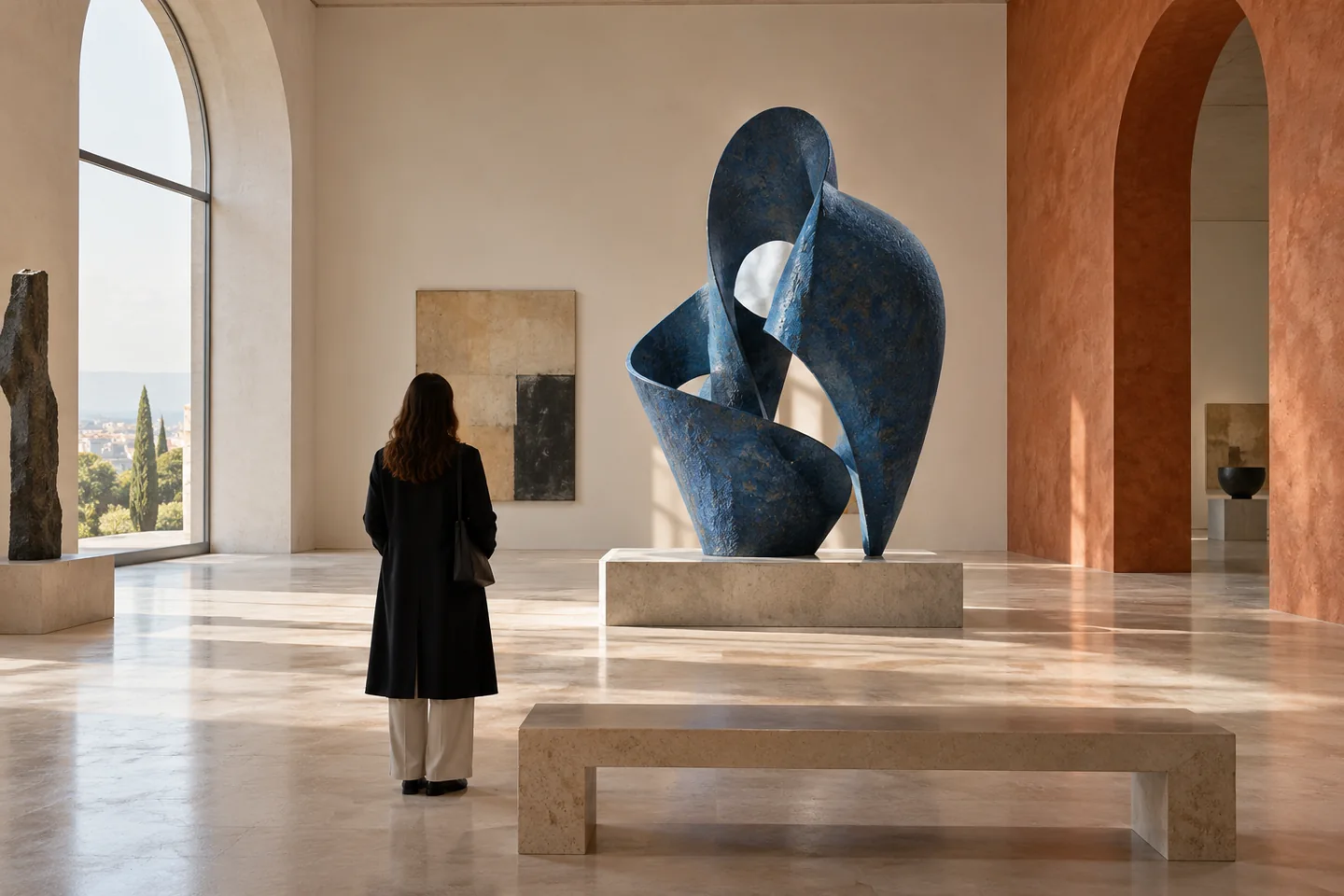
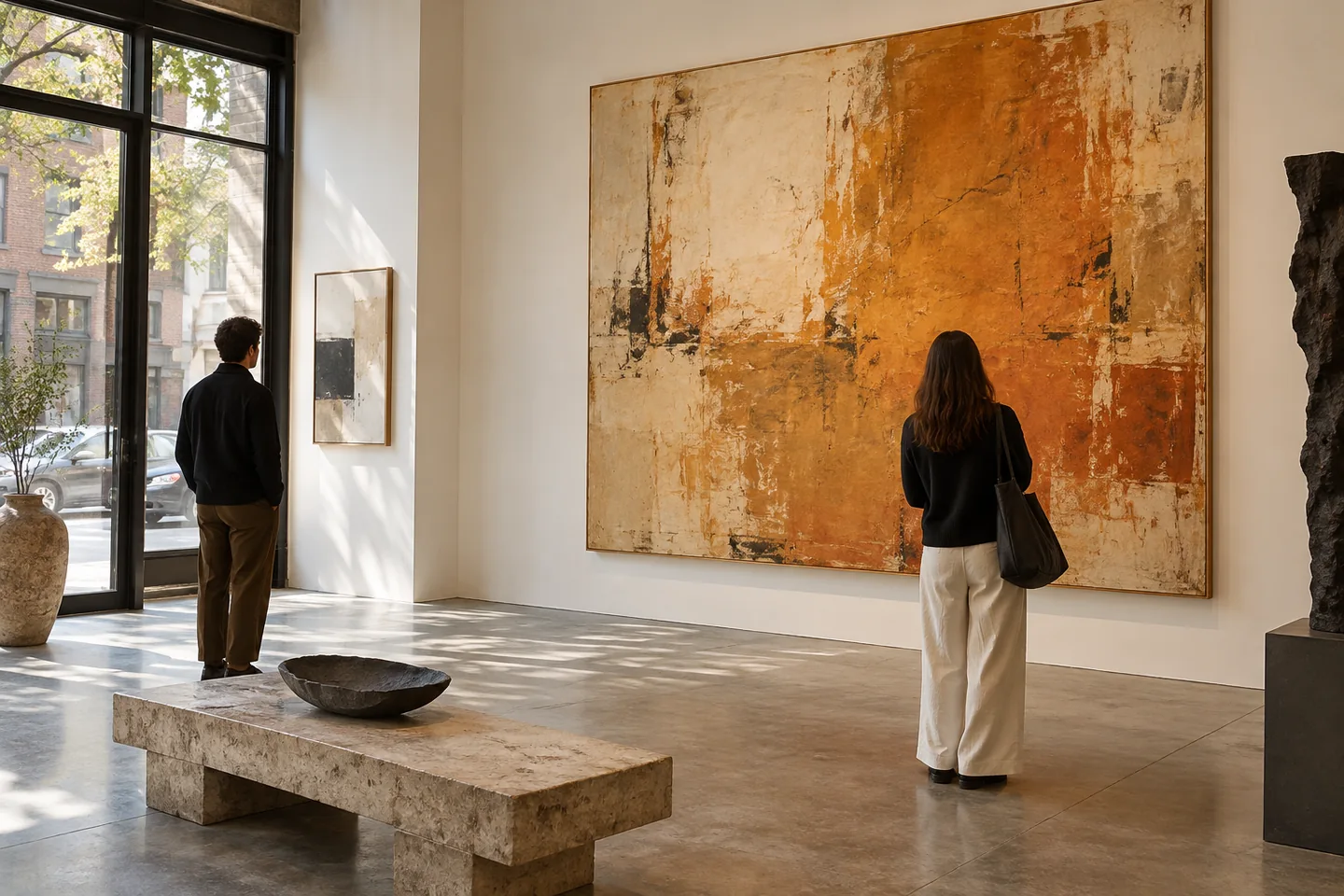
Try a simple exercise: look before reading the label, read it, then look again. Describe what you can actually see—material, scale, rhythm, placement—before deciding what it means. Ask what changed after you learned the title or context. A companion may notice a different detail; comparison is useful without requiring agreement.
Tate's guide to slow looking offers an institutional starting point for spending more time with fewer works. Our practical suggestion is to pick one piece for sustained attention and leave enough time afterward to revise your first impression. You do not need to like the work to make that attention worthwhile. Confusion can become a precise question rather than a reason to hurry onward.
Participate without turning every encounter into content
An opening can be sociable and crowded; a quieter daytime visit may be better for close observation. Neither is the more authentic experience. Choose according to what you want from the exhibition, and ask staff short, specific questions when they are available. “Is there a text about this series?” usually creates a more useful exchange than asking someone to explain an entire show immediately.
Ask permission before photographing people, working artists or private studio materials. Follow the space's image policy and preserve artist credits when sharing permitted photographs. If you can support a program, consider a publication, ticket or donation that fits your budget. Attention, respectful conversation and returning for another exhibition also matter; buying something is not a prerequisite for belonging in a cultural space.
Compare two forms of presentation
Choose one work encountered online and, where possible, see it in person. Notice what scale, sound, texture or surrounding space changes. An image may reveal a small detail clearly while concealing the physical relationship between objects. Record the difference without assuming that the physical encounter is always superior. A digital presentation can supply access, context or a perspective that a room does not. The useful question is what each format makes available. This comparison gives your route another purpose and can help you decide which future exhibitions are particularly worth a dedicated journey.
Turn an afternoon into a continuing interest
Afterward, make three notes: a work you remember, a question it raised, and a connected artist or space to investigate next. Keep the official source link alongside the note. This modest record becomes more useful than a large folder of unexplained images. It lets you notice recurring materials, overlapping communities and changes in programming across separate visits.
For your next outing, pair this route with our exhibition visiting guide or use the culture-focused weekend plan to fit it into a longer stay. The best route is one you can describe afterward in your own words: not simply where you went, but what the places helped you see differently.