An enjoyable exhibition visit begins with three decisions: what you want to see, what kind of visit suits you, and which practical details need confirmation. An opening reception, a quiet collection visit and a timed installation can require very different plans. Treat the organizer's current visitor information as the authority on entry, access and photography.
You do not need an art-history vocabulary to attend. A useful visit can mean understanding one work more clearly, hearing an artist explain a decision, or realizing that a subject interests you less than expected. Preparation should remove avoidable friction while leaving room for an unplanned response.
Read the exhibition page as a practical document
Separate the exhibition's run dates from the venue's opening hours and any special events. An artist talk may take place on one evening within a longer exhibition; an opening invitation is not necessarily a ticket for every program. Confirm whether general admission includes the exhibition, whether a separate booking is needed and whether re-entry is possible if that matters to you.
Save the title, address, booking confirmation and the organizer's visitor-information link together. Look for the entrance description, especially when a venue occupies a large campus or former industrial site. If a detail is missing, write a specific question to the organizer rather than treating an old review as current instructions. Third-party listings are leads, not a substitute for the host's own information.
Choose the right social setting
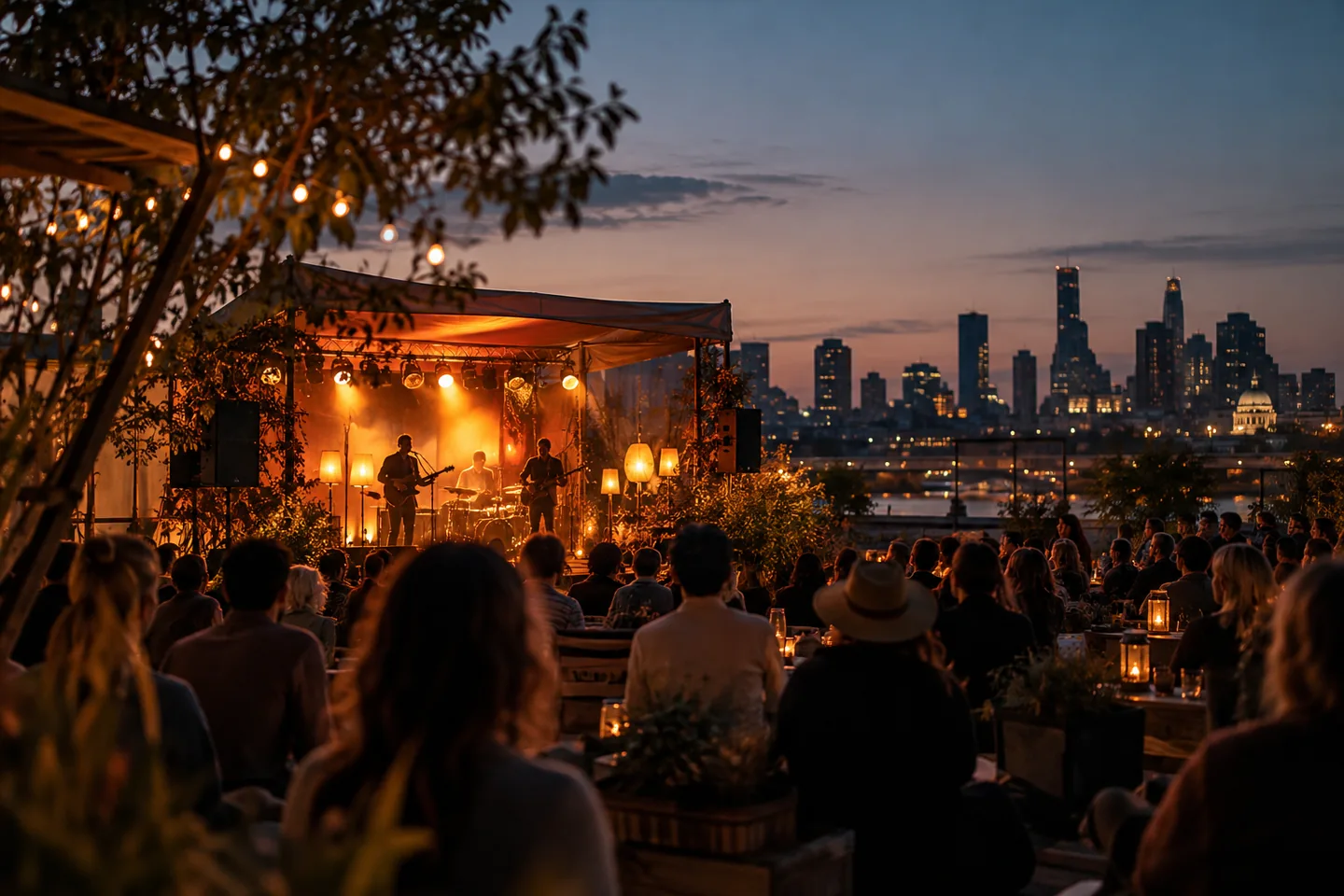
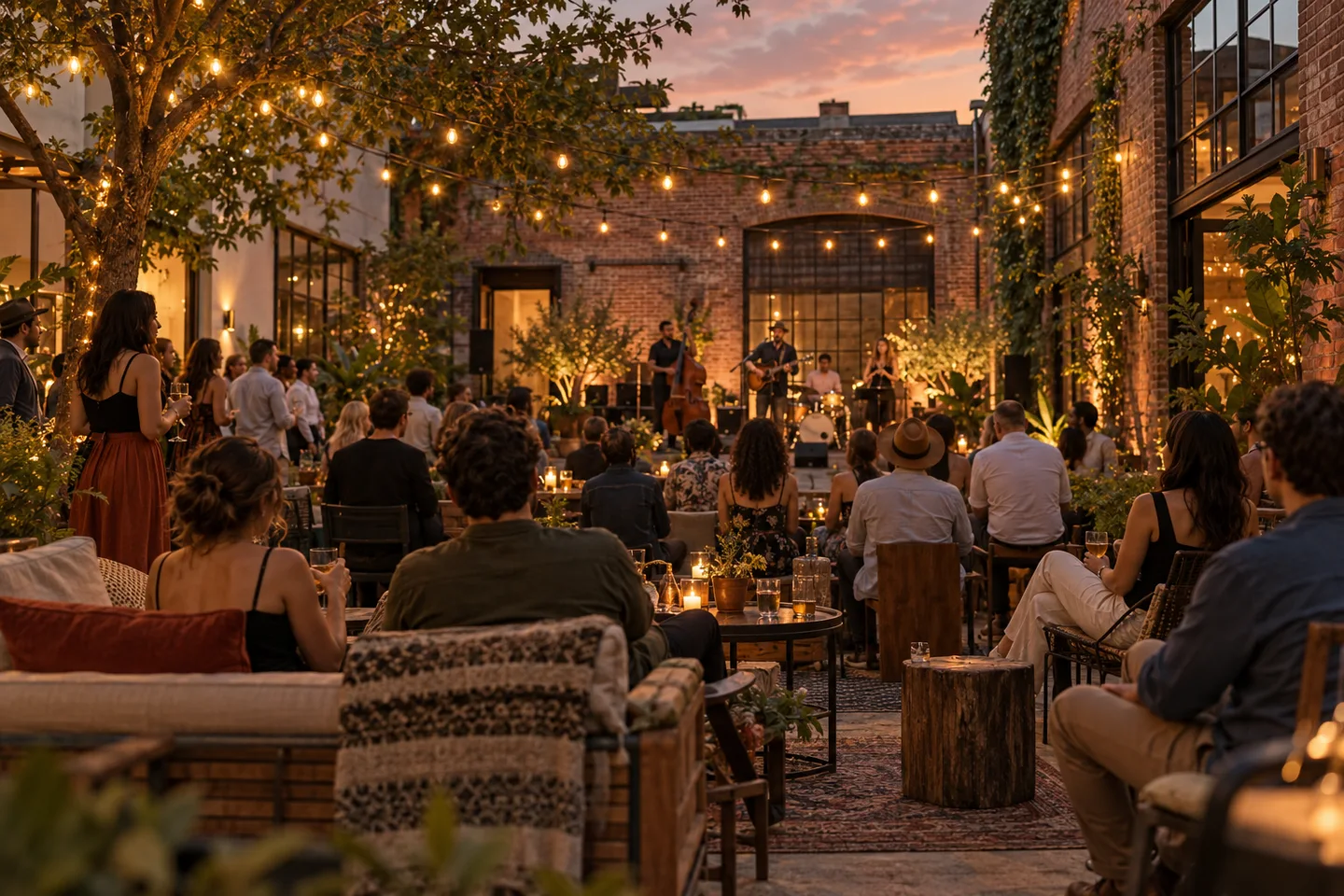
Gallery openings emphasize encounter as much as viewing. Conversations, introductions and a busy room can be part of their appeal. They can also make it difficult to watch a long film or concentrate on a small drawing. If close attention is your priority, consider visiting during regular public hours and checking whether quieter sessions are offered.
A publicized reception and a private preview are different invitations. Read the access wording and RSVP requirements without assuming that a photograph of a crowd proves anyone can enter. Arrive within the stated window, allow staff to manage capacity, and keep expectations about refreshments separate from the art. For a talk, check the language, format and whether a recording or transcript will be available afterward.
Plan access around your actual needs
“Accessible” is too broad to answer every visitor's question. You may need information about step-free routes, door widths, seating, lighting, hearing support, captioning, toilets or the length of a standing performance. Ask about the exhibition itself as well as the building. A lift to the gallery does not tell you whether an installation contains darkness, uneven surfaces or loud sound.
Agree on a meeting point and a plan for taking breaks if you are visiting with someone else. A person who needs to leave a room early should not have to negotiate that in the middle of a crowded event. Check the host's access page and ask about uncertain details before purchasing tickets where possible. Avoid promising that staff can provide assistance that has not been confirmed.
Travel light without guessing the rules
Bag, coat and cloakroom arrangements differ between venues and exhibitions. Check dimensions, restricted items and whether storage is actually available. A cloakroom should never be assumed to accept luggage, expensive equipment or everything a visitor is carrying. If you are coming from a station or airport, solve storage before booking a tightly timed visit.
Pack what supports the day: your admission details, any necessary medication, suitable clothing and an allowed way to make notes. Where a venue publishes limits, measure your bag rather than judging its size from a photograph. If policies are unclear, contact the venue. A broad guide can help you identify questions, but only the current venue information can settle that particular admission decision.
Move through the room with consideration
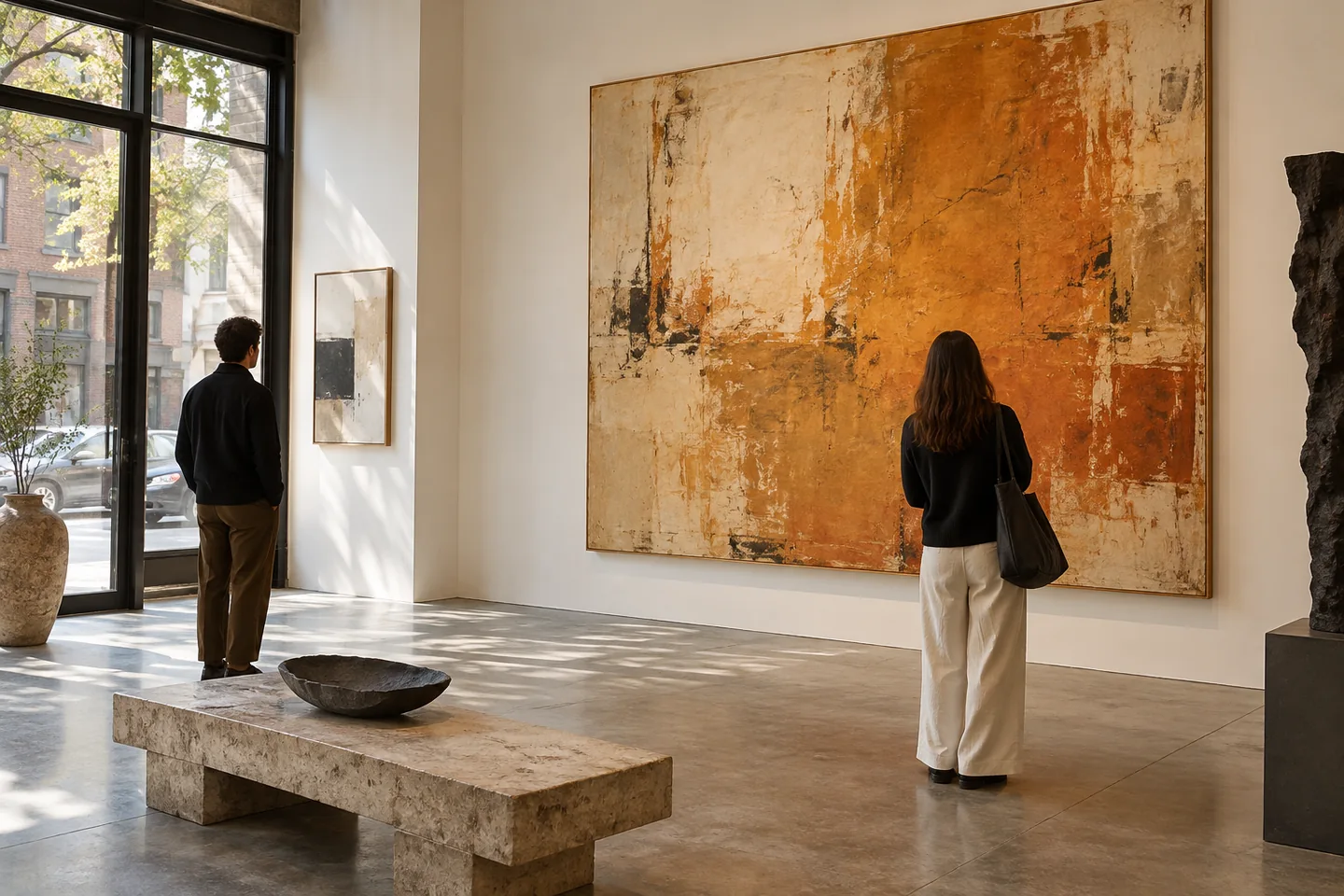
There is no universal correct order for seeing an exhibition. A numbered sequence or timed installation may have a clear route; another room may invite you to wander. Read introductory instructions, notice circulation and leave space for people to approach labels and works. If someone is using a mobility aid, avoid blocking their turning space with a bag or a prolonged conversation.
Do not touch an object unless interaction is explicitly invited. A work that looks robust may still be vulnerable. Ask before moving a seat, entering a marked area or using materials that appear to be part of an installation. If an interactive work has instructions, follow them rather than copying what another visitor seems to be doing. Their interpretation might be mistaken too.
Look, read, compare and return
Begin with a work that holds your attention. Describe its form privately before reading the label. Then examine how the label changes your interpretation. Is the text identifying a material, giving historical context or advancing a curatorial argument? Those are different kinds of information, and distinguishing them can make a difficult exhibition easier to navigate.
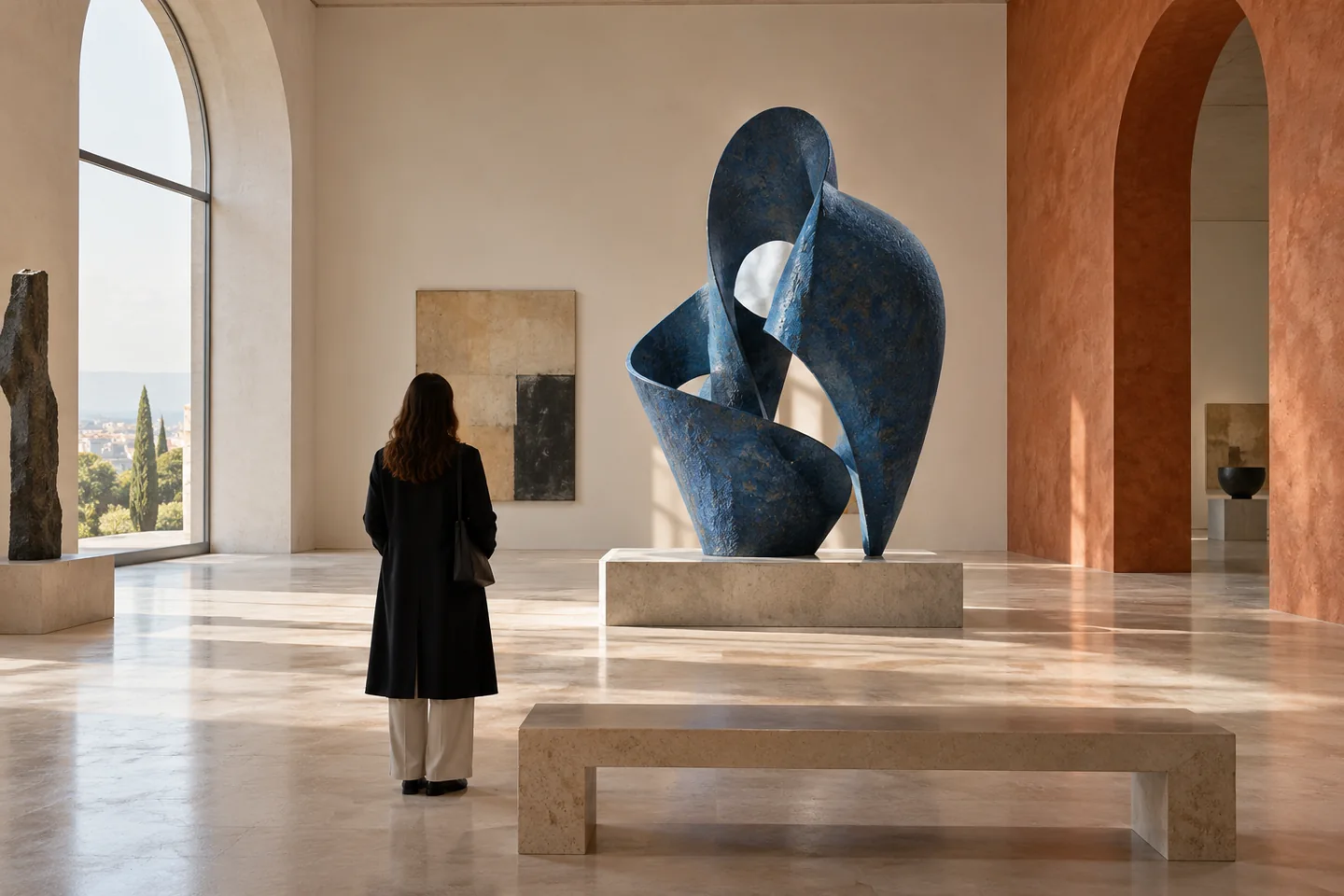
Choose a second work for comparison: perhaps a different scale, technique or response to the same subject. Write one sentence about their relationship. You are building an interpretation, not trying to guess a hidden answer. If you want a structured observation exercise, Tate's ways of looking at art provides another entry point. Leave time to revisit your first choice before departing.
Photograph with purpose and permission
Permission to take pictures is not permission to use flash, tripods, video or professional equipment. Exhibition-specific restrictions may differ from the building's general policy. Check signs and staff guidance. Keep doorways clear, silence devices and avoid repeatedly obstructing another person's view to refine a shot.
Consider whether a photograph will help you remember something an image can actually show. A detail of texture may be useful; a photograph of every label can replace the act of reading them. Record the artist, work title and date when sharing is allowed. Ask consent before making another visitor the subject of an image, and respect a refusal without argument. Public attendance does not make people available as your material.
A compact before-and-after exercise
Before visiting, write one expectation based on the exhibition description. Afterward, write what supported that expectation and what complicated it. Keep the two notes together. This makes it easier to distinguish the publicity you read from the experience you actually had. If you discuss the visit with a companion, compare the evidence behind your responses rather than voting on whether the show was good. One person may be responding to the objects, another to the interpretation or the room. Naming those differences turns a vague disagreement into a useful conversation about how exhibitions work.
Leave with one clear observation
Before you exit, spend a moment deciding what stayed with you. It might be a material choice, a connection between two works or a disagreement with the exhibition's framing. Look for a reading list or exhibition text if you want to continue. Check any purchase or publication details yourself; a shop display does not establish what is included with admission.
Our guide to exploring the wider art scene helps turn that observation into another visit. If the exhibition is part of a busy weekend, the city weekend framework can help protect time for rest and discussion. You have seen enough when you can articulate a useful response, not when your camera contains every wall.