A fashion-publication image is constructed through relationships: clothes and setting, body and pose, photograph and caption, one page and the next. Its apparent ease can conceal extensive selection. Reading those relationships makes an image more interesting without requiring us to treat its atmosphere as a truthful record of someone's everyday life.
Historical-path note: This is a newly written feature at a retained CityLately URL. The original headline, author, date and article text could not be verified. The phrase in the old slug does not establish a specific Vogue article, set or production. This page is not presented as recovered reporting or as a publication affiliated with Vogue.
What an editorial setting actually does
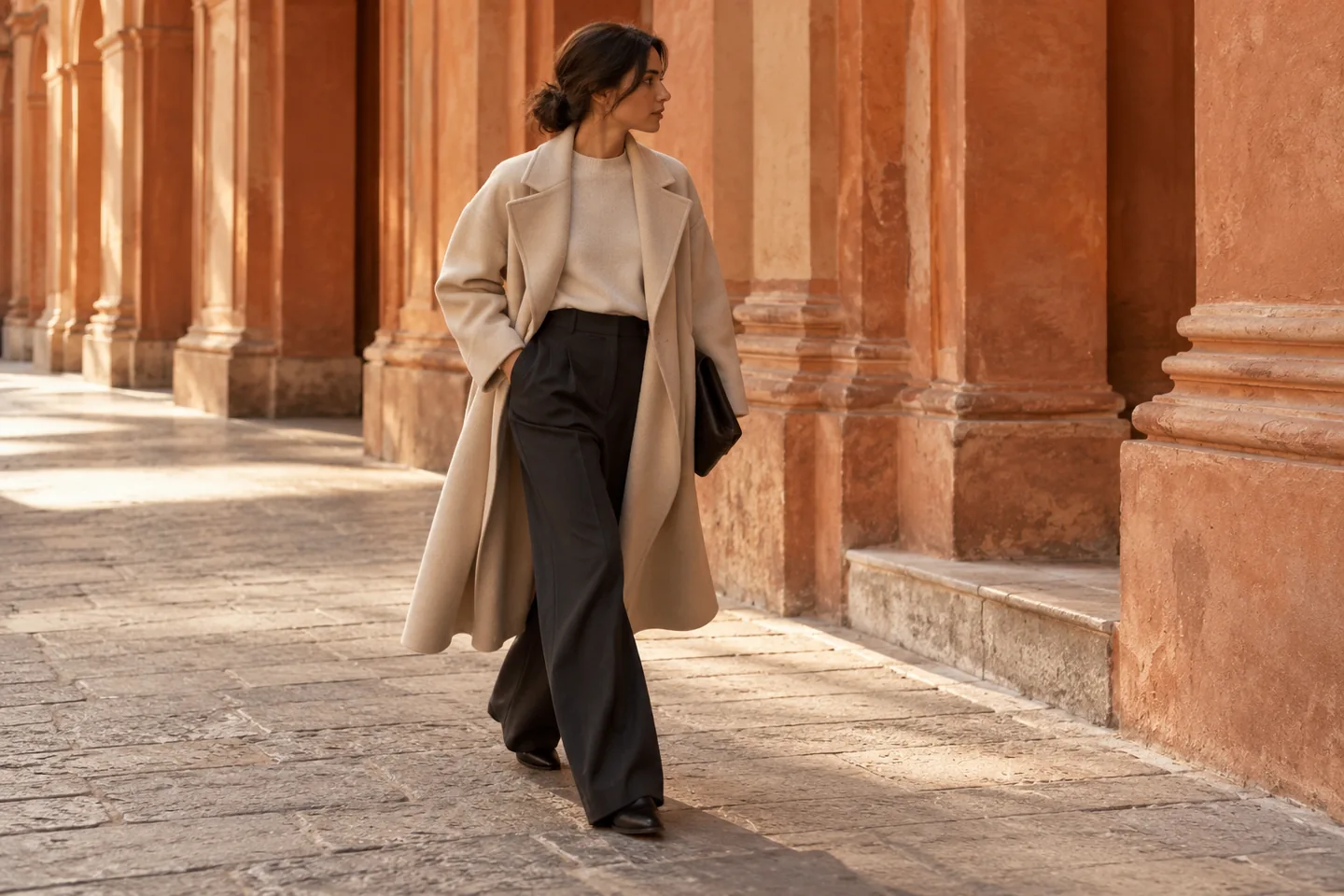
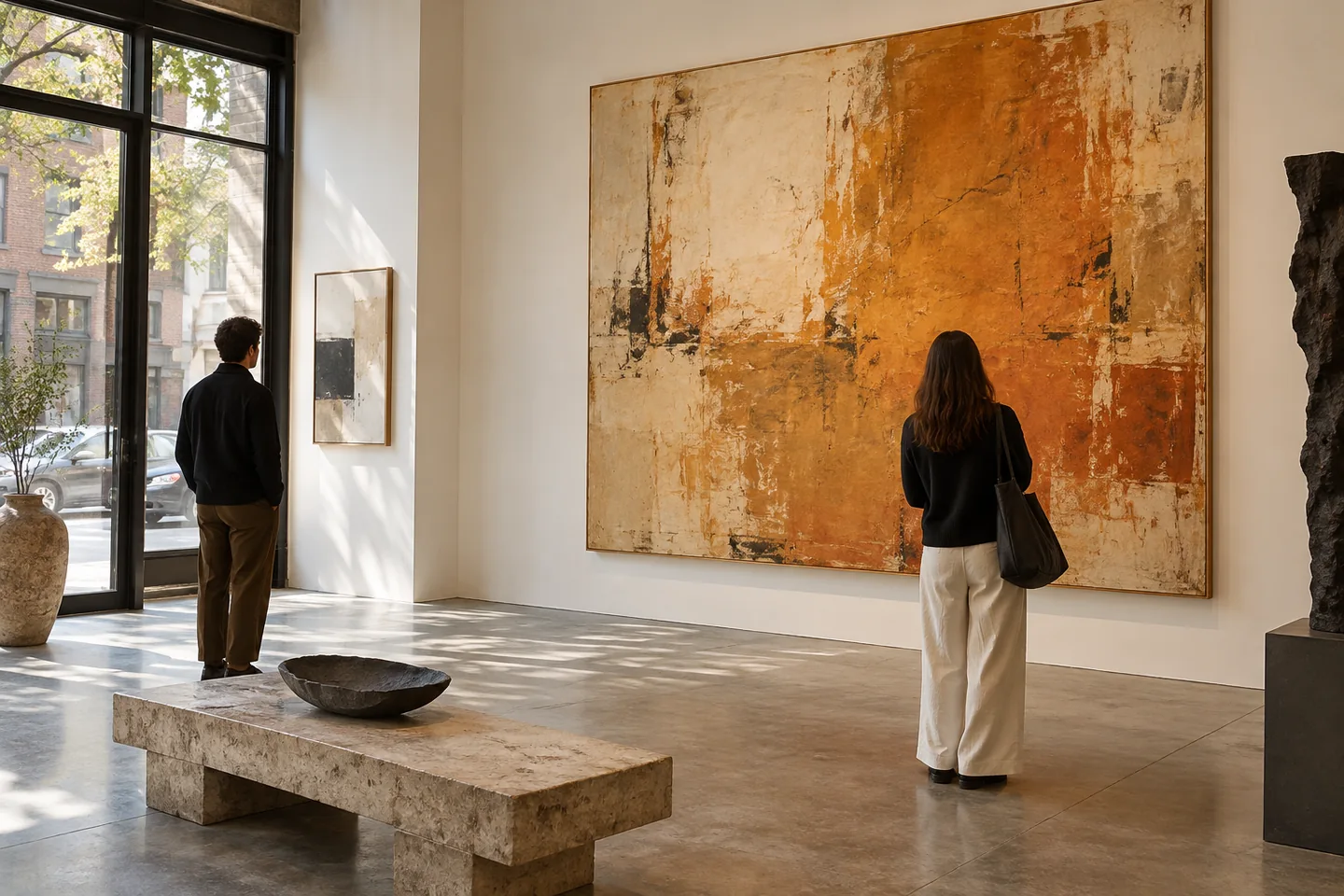
A setting supplies information before a reader has examined the garment. A workshop may suggest making; a stark room may emphasize line; a busy pavement may introduce movement and social context. These are visual effects, not proof of the subject's profession or lifestyle. A carefully dressed studio corner can appear spontaneous while being planned in detail.
To read the image, ask what changes if you mentally remove the setting. Does the garment still dominate, or does the location supply much of the story? Then ask the reverse: what does the clothing make you notice about the room or street? This small exercise separates visible elements from the meanings their arrangement encourages.
Clothes are materials before they become symbols
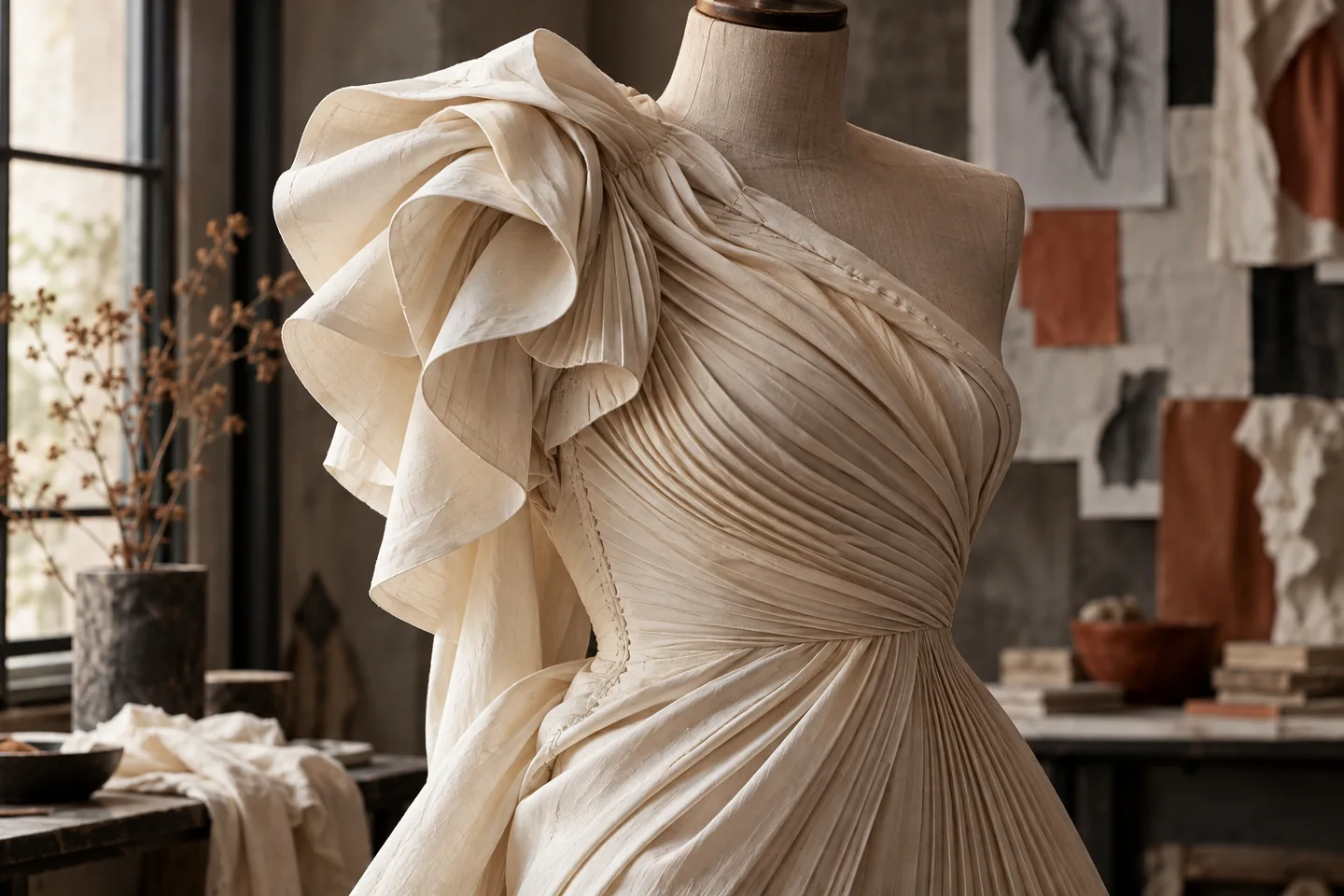
Look at weight, surface and construction. A stiff fabric can hold a shape away from the body; a softer textile may reveal movement through folds. Light can amplify either quality. These observations are more precise than calling a look timeless, powerful or effortless without explaining what creates that impression.
A photograph cannot answer every material question. A glossy surface may not identify the fiber, and a dark area may hide a seam. Use garment credits or collection records when you need factual identification. If the information is unavailable, describe the visible effect instead of supplying an authoritative-sounding material name. Precision includes knowing when an image leaves something uncertain.
A sequence can change the story
Compare a wide establishing image with a detail. The first may show the relationship between figure and city; the second can make a fastening or textile the subject. Placed together, they invite the reader to move between context and construction. Repetition of exactly the same framing can instead make different garments feel more similar than they are.
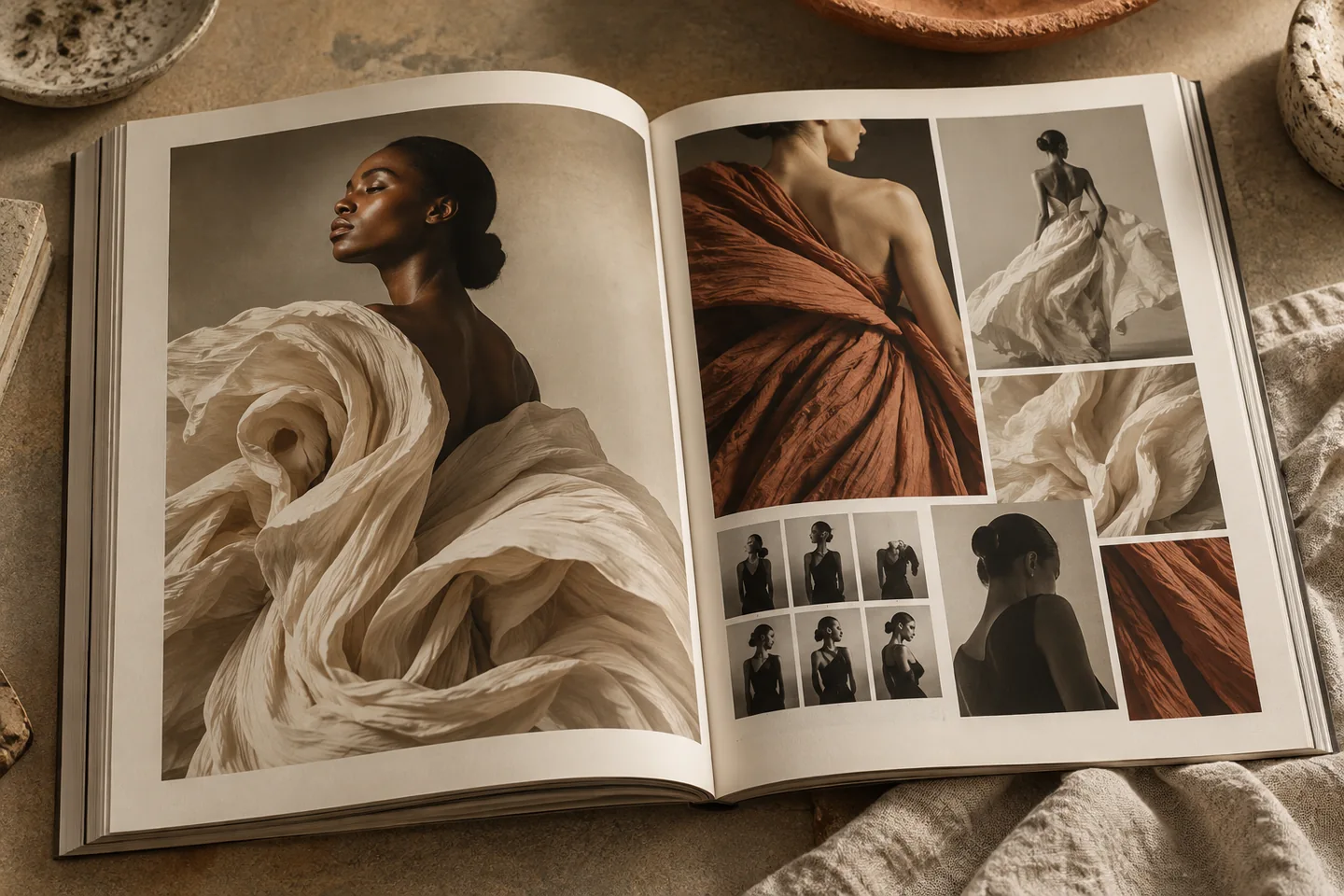
A magazine spread also directs pace. White space, scale and the turn of a page influence how long an image holds attention. On a website, screen size and scrolling change that experience. An editorial sequence should therefore be designed for reading, not simply uploaded as a collection of pictures. Ask why a detail appears at that moment and what it adds to the preceding view.

Captions establish the boundary of the claim
An image and its caption should perform different but complementary jobs. The photograph shows an arrangement; the caption can identify verified garments, contributors, location and context. A strong caption does not need to dictate a feeling. It gives the reader information the image cannot reliably supply on its own.
For new illustrative imagery, the caption should explain that status when a reader could otherwise mistake it for documentary evidence. For historical material, source and rights information matter. Do not infer a named event, year or individual from visual resemblance. A photograph that looks like a famous fashion moment is not evidence that it depicts that moment, and uncertain identification should remain uncertain.
The museum offers a useful second viewpoint
Fashion imagery invites a garment into a visual narrative; a collection record can return attention to the object and its documented context. The V&A's fashion collection provides a starting point for exploring clothing through institutional records and interpretation. This does not make a museum's framing neutral or complete, but it gives a different set of questions from an editorial spread.
Move between the two viewpoints. What is emphasized in the photograph that an object record might not capture? What information about making, attribution or date becomes visible in documentation? The comparison can reveal how much of a fashion story belongs to the garment and how much belongs to the system that presents it.
Borrow a visual principle without copying a production
If you want to make your own fashion study, choose one relationship to explore: a curved sleeve against a straight wall, a dark silhouette against a pale surface, or a moving hem in a static room. Work with clothes and a location you have permission to use. A small clear idea is more useful than trying to reproduce the surface of a recognizable campaign.
Do not treat an urban street as an empty set. Keep entrances and circulation clear, obtain permissions where required and respect people who do not want to appear in your work. A visually compelling location remains someone's workplace, home or route through the day. The practical constraints can improve a composition by forcing you to decide what is essential.
Read the image and keep the person in view
A persuasive fashion image can make a world feel coherent. The reader's task is not to reject that pleasure but to understand its construction. Notice what is shown, what is credited and what is left outside the frame. Separate a visual impression from a factual claim about an individual or a city.
Our street-style essay brings those questions back to daily clothing, while the couture silhouette feature concentrates on volume and making. Together they offer a vocabulary for looking beyond an attractive surface: setting, material, sequence, evidence and use. A fashion image becomes richer when its carefully built atmosphere is the beginning of inquiry rather than the end.